
Guiding people through buildings, without a single beacon.
Camera-only indoor positioning, turned into turn-by-turn AR guidance. Sole designer across the whole ecosystem — web, mobile and wearables — held together by one design system.
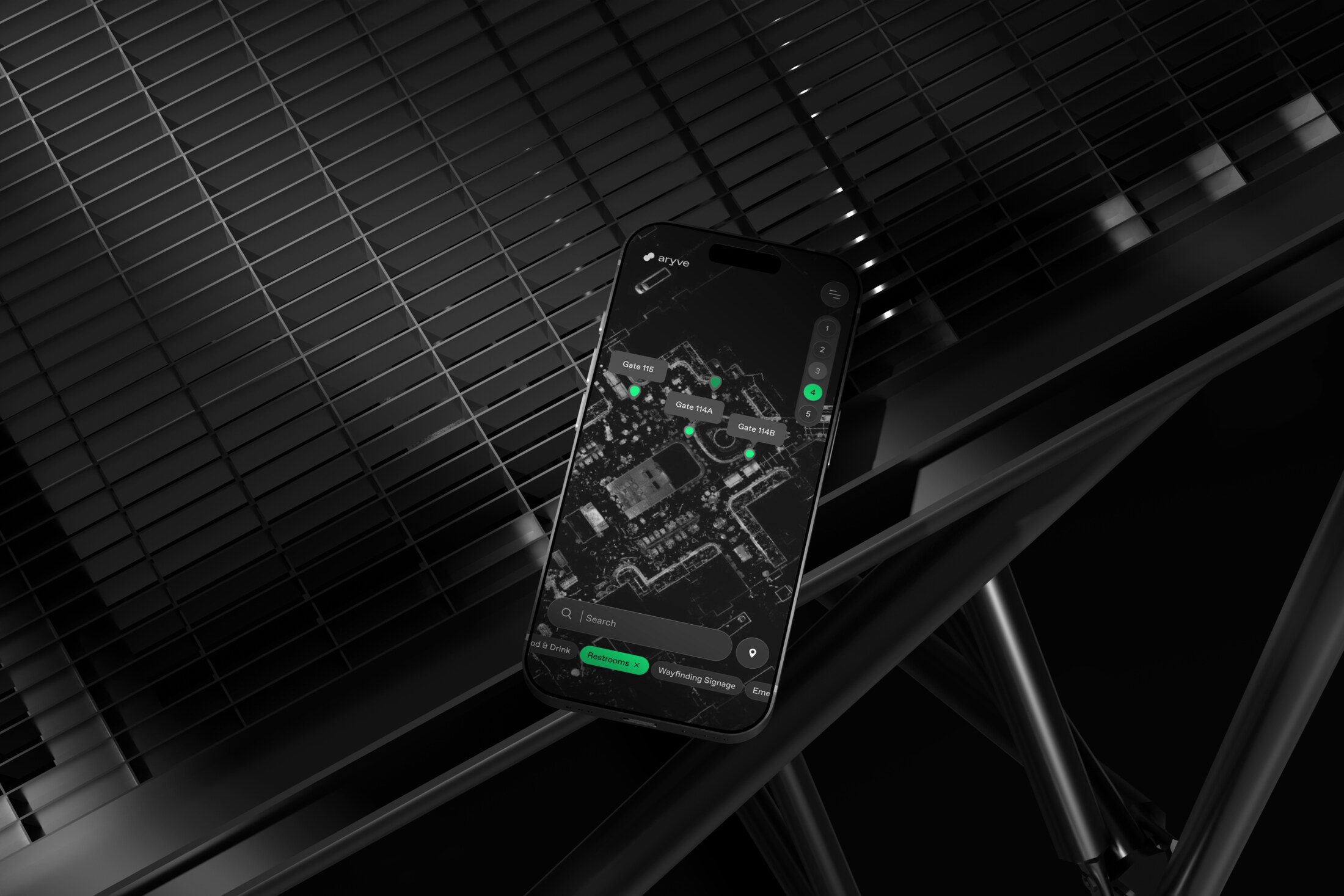
GPS dies indoors — right where getting lost costs the most.
Airports, museums, hospitals: wayfinding matters most exactly where GPS fails, and beacons or Wi-Fi mean hardware to install and maintain. aryve's answer is a Visual Positioning System — the phone camera against a 3D scan, entirely in software, no beacons.
One designer, the whole ecosystem.
Sole designer at aryve, from discovery to engineer-ready specs — working directly with PM and computer-vision, platform and front-end engineering. Every surface was mine: the passenger experience on web and mobile, the wearables / AR-glasses view, and the Studio platform teams use to author it all — three connected products, one system.
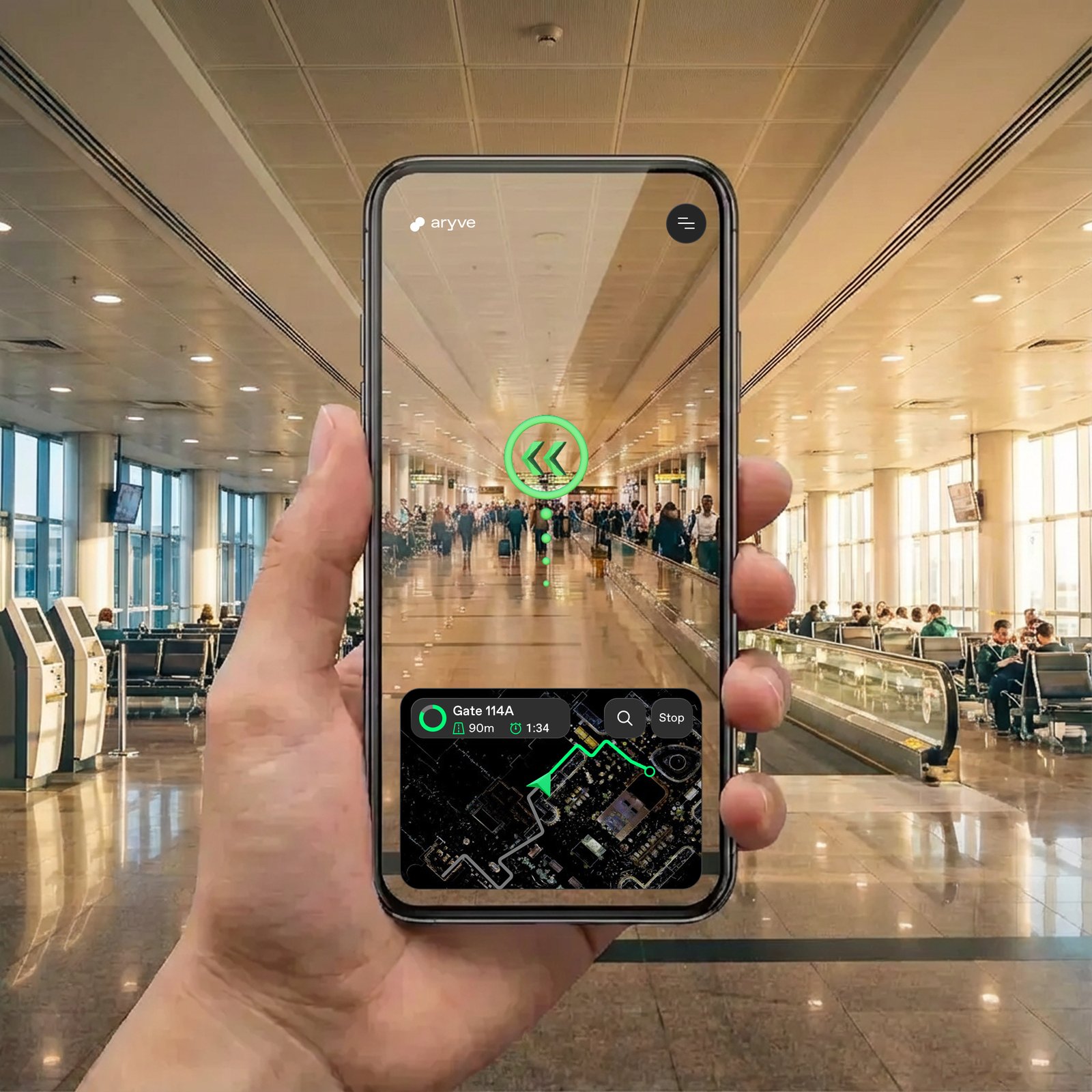
Direction in the world, not a screen over it.
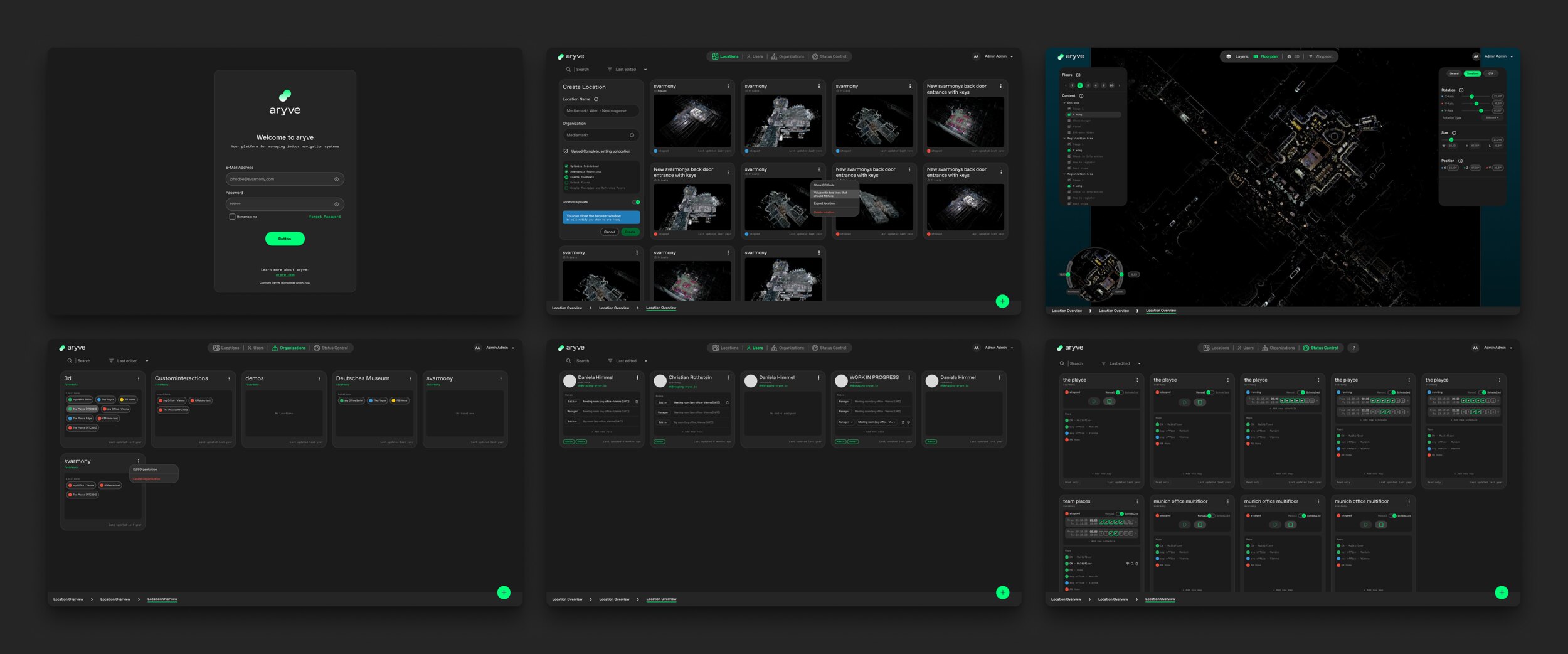
The platform behind every deployment.
Studio lets a venue's own team author the navigation — draw paths in the 3D model, place AR content, and manage locations, users and status, no code. Enterprise UX where a non-expert does a spatial job on a flat screen.
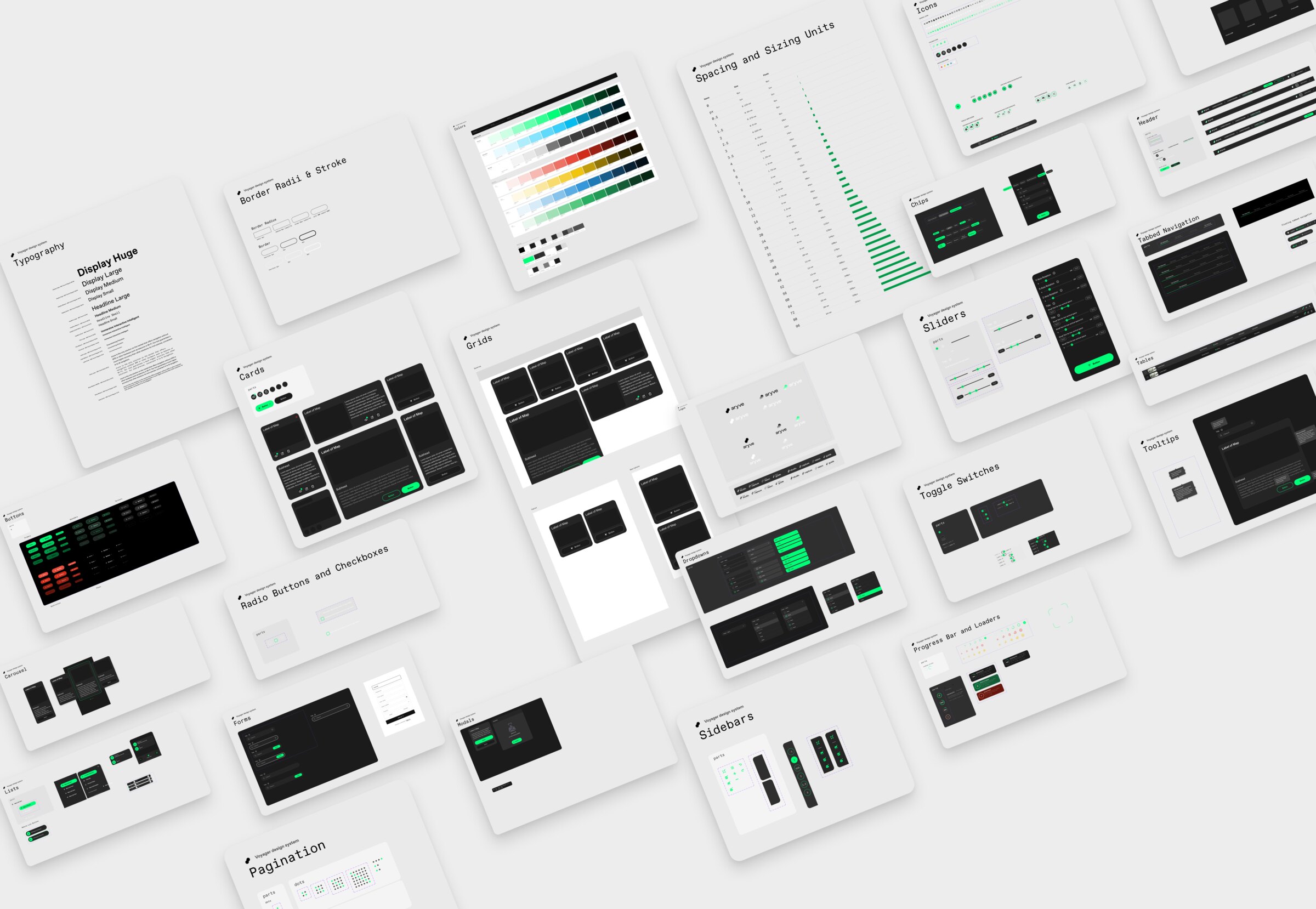
One system — the single source of truth.
The design system is the core of the work: one token set and component library across web, mobile and wearables — the single source of truth every engineer built from, so one designer could keep pace with parallel platform, CV and front-end teams and keep three surfaces feeling like one product. The next step turned it into a living document that delivers tokens and components to engineers straight as code.
Accessible by design; AI-accelerated.
Accessibility was built in from the start — contrast, target sizes, screen-reader flows and low-vision guidance in dense spaces — designed toward BFSG/WCAG, though never formally certified as compliant. An AI-assisted workflow sped up research and exploration for a one-person function, always labelled, never shipped as real evidence.
What it added up to.
Live PoCs at Deutsches Museum (≈42,000 m²) and Playce Berlin; now live at PAD airport — scan to live in 48 h, zero hardware (source).